
This briefing was created to support elected members in considering the planning applications relating to Winstanley Hall and associated housing development.
It is not an objection to housing. It is a request for careful scrutiny of a highly sensitive enabling development where the risks, consequences and long-term implications are unusually high.
Given the importance of this site and the irreversible nature of the impacts proposed, it is essential that Members are confident they have been presented with the full, unfiltered picture before being asked to make a determination.
1. This Is Not a Normal Housing Application
The submitted proposals are not a standard residential development. They are an enabling development, where large-scale housing is justified on the basis that it will fund the conservation of a Grade II* listed building.
National policy treats enabling development as exceptional. It is only justified where strict tests are met, including:
- Minimum necessary development
- Clear and lasting public benefit
- No viable alternative
- Robust financial justification
- Secure and deliverable conservation outcome
If these tests are not fully satisfied, the development does not become less good. It becomes unsafe to support.
Members should therefore consider whether the evidential threshold required for enabling development has genuinely been met.
2. An Exceptionally Sensitive Site
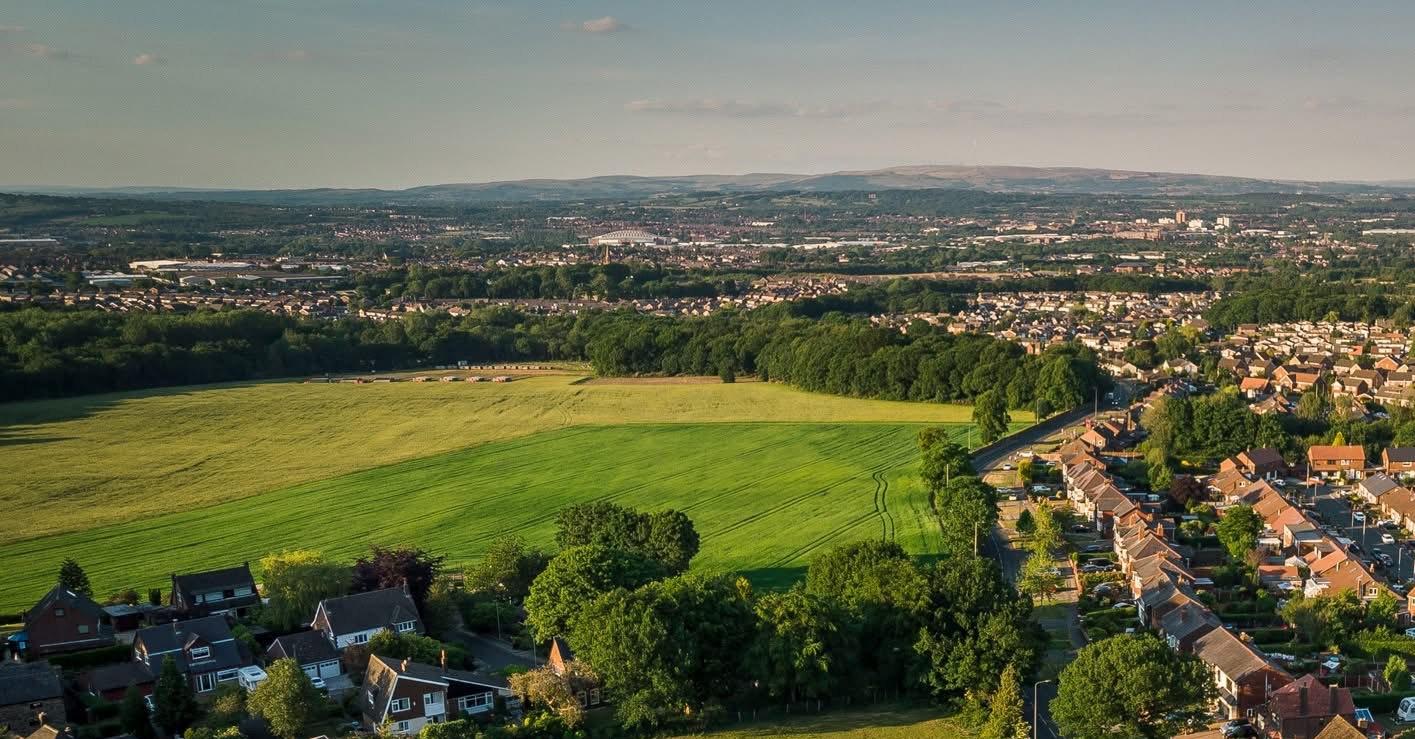
Winstanley Hall sits within historic parkland, greenbelt land and a flood-sensitive catchment. It is a Grade II* listed asset of national importance.
On a site of this sensitivity, small errors have large consequences. Decisions taken without complete evidence are particularly vulnerable to challenge and unintended harm.
Members may wish to consider whether the current evidence base reflects the level of scrutiny such a site requires.
3. Environmental Assessment and Flood Risk
The Council has confirmed that the decision not to require a full Environmental Impact Assessment is based primarily on a screening matrix.
There is no published detailed technical report, cumulative assessment, or comprehensive appraisal underpinning this decision.
Key issues remain unresolved, including:
- Catchment-wide flood risk
- Downstream drainage impacts
- Climate resilience
- Biodiversity net gain compliance
- Cumulative environmental effects
Members may wish to consider whether reliance on a single screening tool provides a sufficiently robust foundation for decision-making on a site of this sensitivity.
Without comprehensive assessment, the Council’s position becomes vulnerable at appeal.
4. Design Quality and Place-Making
The submitted layout follows a standard suburban estate model. It is housing-led rather than heritage-led. The Hall is surrounded and visually diminished rather than treated as the organising focus of the site. There is no clear civic space, heritage setting or meaningful sense of place.
And no benefit to the community.
Members may wish to reflect on whether this represents an appropriate response to one of the borough’s most important historic assets.
5. Heritage Impact and Authenticity
The proposals involve dismantling, demolishing and removing major heritage parts of the Hall, and only retaining façades while replacing the interior with a new building.
Whilst some of the building is partly dilapidated substantial internal plan form and historic fabric currently survive, including rooms, staircases, circulation routes, stone floors and other original materials.
Independent heritage specialists have confirmed that this internal fabric has evidential and historic value. Its removal is not driven by necessity, but by commercial convenience.
This approach reduces cost and risk for the developer but permanently removes the Hall’s authenticity as a historic artefact.
Members should be aware that this is not conservation in the traditional sense. It is reconstruction around retained stonework. This proposal is the conservation equivalent of taxidermy.
Once carried out, this loss cannot be reversed.
6. Financial Viability and Delivery Risk
The financial appraisal shows that even with nearly 400 houses, the scheme does not clearly generate a guaranteed surplus for restoration.
Funding depends on:
- Optimistic house prices
- Stable construction costs
- Long-term market performance
- Extended build-out over nine years
There is no clearly ring-fenced, upfront fund for the Hall.
Homes England support assists housing delivery. It does not guarantee heritage restoration.
Developer profit remains included and adjustable, indicating that housing numbers are a commercial choice, not an inevitability.
Members may wish to consider whether this represents a secure basis for relying on housing to fund conservation.
7. Developer Experience and Capability
The applicant has no proven track record delivering heritage-led regeneration at this scale. This has been acknowledged by English Heritage to Wigan Council Officers. There is no evidence of successful restoration of Grade II* buildings within their portfolio. This places additional delivery risk on the scheme.
If delivery stalls or financial pressures arise, the Hall becomes the most exposed element.
8. Reliance on Conditions
Many fundamental issues are proposed to be addressed through future planning conditions, including:
- Drainage solutions
- Biodiversity mitigation
- Heritage methodology
- Access arrangements
This reverses good planning practice.
Conditions are intended to resolve detail, not fundamental acceptability.
When core issues are deferred, they often resurface as disputes, delays and appeals.
Members may wish to consider whether approval on this basis transfers risk to the Council and impact onto the community.
9. Process and Decision Risk
Taken together, these issues raise the question of whether the current applications are being presented to Members as more complete and settled than the underlying evidence supports.
At present, the applications are in a position where neither approval nor refusal can be safely defended.
Approval on a thin evidential base would lock in heritage and environmental harm without adequate safeguards.
Refusal based on incomplete assessments would be vulnerable at appeal.
This creates a governance trap in which the authority risks losing control of the outcome whichever route is taken.
The only defensible course in such circumstances is to require the evidential base to be strengthened before determination.
Proceeding otherwise transfers avoidable legal, financial and reputational risk to the Council.
10. The Last Chance Narrative
Members may have been told that this scheme represents the last opportunity to save the Hall.
This framing is emotionally powerful but misleading. We are not being anti-saviour but we are being anti-permanent loss.
The current proposals do not offer full conservation. They offer partial retention of walls only and modern reconstruction. Approving irreversible heritage loss in the name of rescue risks foreclosing better solutions.
Other historic buildings once considered lost causes have been restored through phased, conservation-led approaches when the right framework was established.
Choosing caution now does not mean abandoning the Hall. It means refusing to sacrifice it to an uncertain commercial model.
11. Accountability and Long-Term Consequences Once permission is granted:
- The heritage outcome is fixed
- Leverage is lost
- Control shifts to the developer
- Risks transfer to the Council and impact onto the community Any failure will not be reversible.
Members will be accountable for that outcome. This is not a routine decision. It will shape the site and community for generations.
Conclusion
This scheme is being presented as difficult but necessary.
On the available evidence, it is more accurately described as high-risk and insufficiently tested. Supporting it does not de-risk the Hall. It transfers risk to the Council and the community.
Members are therefore encouraged to consider whether further work, independent scrutiny and strengthened evidence are required before any determination is made.
Doing so is not obstruction. It is responsible governance.

Leave a Reply